Tag: new year resolution

  • Podcast: Strategic Insights To Diversity And Inclusion Development

    Podcast: Strategic Insights To Diversity And Inclusion Development

    [vc_row][vc_column][vc_column_text]

    [/vc_column_text][/vc_column][/vc_row][vc_row][vc_column][vc_column_text]

    PodCast: Strategic Insights to Diversity & Inclusion Development

    Most companies are wasting their time with generic training on Diversity and Inclusion. While employees receive certificates like before, nothing has really changed. This episode shares strategic insights to reshaping your perceptions and thought processes within the diversity and inclusion movement.

    Explore the 3 keys to effective diversity and inclusion as an organizational strategy which leverages the diversity of thought to create powerful innovations.

    For those who wish to make a systemic impact, explore the most integrative and transformation diversity & inclusion program here.

    [/vc_column_text][/vc_column][/vc_row]

  • Podcast: Courage to Reinvent Yourself: An Interview with Barbara Majeski

    Podcast: Courage to Reinvent Yourself: An Interview with Barbara Majeski

    [vc_row][vc_column][vc_column_text]

    [/vc_column_text][/vc_column][/vc_row][vc_row][vc_column][vc_column_text]

    PodCast: Courage to Reinvent Yourself: An Interview with Barbara Majeski

    The pandemic has forced many people to reflect and look deep inside. This episode highlights a courageous, loving, wise, purposeful, and inspirational leader in Barbara Majeski and how she reinvented herself from the toughest moment in life. The interview shows numerous incredible wisdoms for people trying to find their passion, being a great parent, finding the courage to be who they need to be.

    A few wisdoms from Barbara Majeski:

    “Only in the darkness will your stars shine”

    “We all have unique gifts and genius”

    “Purpose lies in the smallest things that we do”

    For those who wish to explore ways to reinvent yourself as a leader, explore our corporate development programs or the most practical and ONLY executive MBA program in Inclusive Leadership.

    [/vc_column_text][/vc_column][/vc_row]

  • Do’s and Don’ts for Upskilling

    Do’s and Don’ts for Upskilling

    [vc_row][vc_column][vc_column_text]

    [/vc_column_text][/vc_column][/vc_row][vc_row][vc_column][vc_column_text]

    Do’s and Don’ts for Upskilling

    Avoiding the Thieves in the Education

    By Dr. Ted Sun

    You’ve just paid the money to be in yet another certificate program, excited to be learning something new. As you go through the introductory materials, you find that the course wants you to spend 3-4 hours each week over the next 12 weeks. This doesn’t sound too bad, except you’ll need to take time away from your family to do it, since work continues to be demanding. You tell yourself, “This is an investment in me and it’s worth it”.

    Later in the week, you’re sitting in front of your computer or smart device, staring at the enormous amount of information in front of you. Some are beautifully presented words with vivid images, while others are somewhat entertaining videos. After one hour, your mind begins to linger. Your eyes wonder away and see the certificates on your wall. One certificate is on conflict resolution, another is on emotional intelligence. A recent one that your company had you complete was on active listening. As you saw that one, it brings you to the intense zoom meeting yesterday that had no active listening by anyone on the team. You wonder, if the entire team took that training and all earned the same certificate, why didn’t anyone use what they had learned? As your own best critic, you wonder, “Why didn’t I use my emotional intelligence or active listening to change the intensity of the meeting? What were the tactics in that course?

    This happens all too often. Countless people hoping to learn something are misled by the thieves in education who take your money and time without giving back knowledge that’s retained or the skills that they promised. The reality of certificates as evidence of skills is all too common. Similar to the amount of knowledge retained from formal education in universities, many courses in upskilling for professionals continue to push information without the accountability of knowledge retained. How do we get beyond the conventional approach to upskilling that makes a sustainable difference in thought processes and skills? How would you get results like 27.2% reduction of time in Zoom meetings within 2 months from a remote management upskilling course?

    Foundations of education and learning

    The conventional approach to education has been around since the early 1900’s. The system was built to create workers in the assembly line who are submissive to authority. Today’s education system has not changed much, even though the topics have had great advances. Recently, I attended a professional development course on the neuroscience of learning at a major university. While the contents of the course had brilliant perspectives on how the human brain learns, it was still being delivered as massive amount of information pushed at us over several weeks without alignment to what the contents stated. Even with experts in the theory of learning, how they taught did not align with what they taught. How new information is taught makes a world of difference to how much you retain and can actually use when a situation occurs (a skill).

    As an organizational psychologist who’s taught educators across the world, along with numerous executives, how to teach, I hope to break the cycle of wasted time and money for some certificate that holds very limited practical value. Let us start with defining learning, which is a process that results in relatively permanent change in how one perceives reality and/or thinks. Knowledge is something that resides within the individual mind that can be recalled easily when needed. The best approach to learning is by combining what you already know with the new information (constructivism). Then, through meaningful application, emotions are attached to new information, creating sustained knowledge and skills.

    Don’ts in Upskilling

    For educational and training organizations, consider the followings Don’ts when developing various courses on upskilling. For those looking to upskill, watch for these Don’ts to avoid the wasted time and money, especially when that time is taken away from your family.

    • Generic information: Countless educational institutions and companies push generic information at people. This is a profitable approach since content is designed once and sold to many people. In some cases, the content is out of date, especially with the challenges in the current pandemic. More importantly, it is not meaningful, thus leading to very limited recall. The following is one example of a certificate course sold for $3,300 at a premier university.

    With only three live sessions, the enormous amount of generic video lectures results in information overload with very low return on time invested in watching them. Many companies offer training on demand, which is more generic content that does not engage the participant in a meaningful way.

    • Regurgitation of materials: We have all been forced to take a test of some kind to pass a course or to get a certificate. How much of what we regurgitated shortly after the test do we actually remember? Regurgitation does not equate to long term recall of information and is definitely far from developing a skill. Many professional organizations still use tests to issue people certificates from project management to emotional intelligence.
    • Abundance of new information: Many people speak of reading books, listening to podcasts, or watching videos as a form of learning. From the brain perspective, it is only new information being processed. Some universities are offering free content through their online courses, where you can pay if you want a formal certificate at the end. Skills are never developed by simply receiving new information. Without meaningful application, they get processed by your brain and then tossed aside.
    • Meaningless cases: Many courses still use case studies for a method of delivering content. While this is one starting point to application, it is highly limited in creating an emotional connection with the new information that leads to knowledge. Consider all cases in annual ethics courses most companies impose on people. Reality rarely mirrors the cases. Furthermore, the case scenario given in writing fails to develop one’s skills in identifying a real-world issue. Theoretical application results in limited recall.

    Dos in Upskilling

    Furthering your skills requires a learning system that ensures that whatever new information is received becomes knowledge and can be masterfully applied as a skill. The fields of neuroscience in learning and educational psychology can elevate upskilling programs with the following four steps.

    1. Understand your tacit knowledge: This is where you reflect and assess what you currently know about a topic. Various assessments can be used to see the current skill level that you may have. This builds a baseline for self-awareness and also enables you to find what is meaningful and needed currently.
    2. Bite sized content: With the amount of information coming at the human brain, learning requires a laser focus. Instead of reading a book or watching an hour-long video, obtain a bite sized piece of information that interests you. Understand how this can be applied to help you achieve your goals and if it aligns with who you are from your beliefs and values perspective.
    3. Immediate application: Design a safe environment to apply the bite sized information within the next 48 hours. This application further allows you to begin to practice a new skill, while transitioning information into your personal knowledge.
    4. Emotional attachment: For the human brain to be able to effectively retain and apply new information over time, your emotion is the glue that makes it happen. Measuring your application is the key to creating the emotional glue. When measuring the outcomes, explore questions like how it impacted your relationships, how it helped you achieve a goal more efficiently, and how it made you physically and emotionally feel when you applied it. Within the measurement, you are creating an accountability structure.

    The above Dos and Don’ts are just a high-level overview. Much of the thoughts are based on grounded principles in educational psychology such as constructivism. This provides a huge opportunity for educational institutions and companies to upgrade their approach to learning. From an ethical perspective, we all have a responsibility to help people advance their knowledge and skills. This is commonly stated in the vision, mission, and values of these organizations. Wouldn’t it be great for these organizations to start practicing what they preach?

    Transcontinental University is a unique institution which has built many educational programs that are customized to both the needs of the organization and the individual. Their power educational model has made significant advances in many aspects of upskilling and intelligence improvements. For example, instead of a generic remote management skills course, the Transcontinental University program is customized to the needs of the organization with a selection of specific skills needed by the organization. The needs of the individual are met within each skill, starting with a full understanding of where the individual currently is in the skill and the context of application. With outcomes that matter for the business, Transcontinental’s remote management program is light years ahead of most meaningless certificates. For example, a recent outcome in a single remote management skill is a 27.2% reduction of time in Zoom meetings within 2 months, while clarity of responsibility has removed redundant communication and frustrations.

    Countless hours are spent taking courses at various educational and training institutions. Most of the information shared is lost. Neuroscience and educational psychology have clearly shown what’s necessary for the human brain to retain information and build skills. Let’s stop doing what’s always been done for profitability’s sake and start shifting how information is delivered to become sustained knowledge and practical skills.

    [/vc_column_text][/vc_column][/vc_row]

  • Podcast: Golden Rule of Respect vs Love vs Diversity, Equity, & Inclusion (DEI)

    Podcast: Golden Rule of Respect vs Love vs Diversity, Equity, & Inclusion (DEI)

    [vc_row][vc_column][vc_column_text]

    [/vc_column_text][/vc_column][/vc_row][vc_row][vc_column][vc_column_text]

    PodCast:

    Golden Rule of Respect

    vs

    Love

    vs

    Diversity, Equity, & Inclusion

    • What kinds of conflicts are you facing on a monthly basis?
    • How strong are your relationships within the workplace or at home?
    • How much influence do you carry when you speak?

    This episode exposes the fallacies in Golden Rule of Respect. Being extremely popular, it is embedded in how we approach so many forms of relationships that brings ample conflicts whether it’s a personal relationship or a business one. From a personal perspective, explore how love shows respect by understanding the needs of others. From a business perspective, build a wall of needs to develop the skills to synthesize needs and preferences from multiple perspectives.

    Especially with Diversity, equity and inclusion (DEI), build a knowledge structure that shows respect to all voices.

    If you like what you’ve heard, take action. Expand your influence as a leader by establishing a level of respect that’s admired by all.

    For those who wish to make a systemic impact, explore the most integrative and transformation diversity & inclusion program here.

    [/vc_column_text][/vc_column][/vc_row]

  • 4 secrets to innovation

    4 secrets to innovation

    [vc_row][vc_column][vc_column_text]

    [/vc_column_text][/vc_column][/vc_row][vc_row][vc_column][vc_column_text]

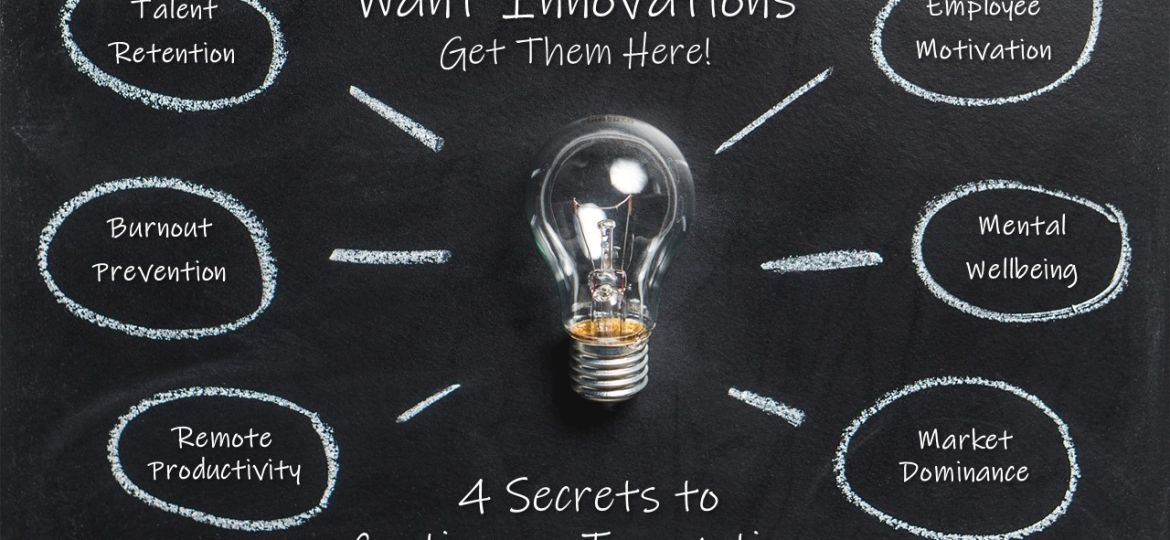
    4 Secrets to Innovation

    How many innovations per month are you implementing?

    By Dr. Ted Sun

    Before the pandemic, innovation was nice to have to achieve success. Then, with the pandemic, innovation is a necessity to survive.  Those who can innovate have already done it and capitalized on the opportunities in the pandemic. Now, moving into the post-pandemic era, where’s your organization in terms of innovation?

    Consistent innovation requires a knowledge structure. This knowledge structure understands the neuroscience of creativity at the individual level, leverages empowerment processes at the team level, and implements a knowledge creation system at the organizational level. When all three components are in place, continuous innovation transforms the interaction between you and your clients/customers. At the end of the day, organizations must create systems that drive innovation at all levels to compete globally and thrive.

    Imagine an organization that consistently innovates. They have created a system to mass produce innovation. They have a solid awareness of who they are and their purpose. Their clients no longer see this organization as a generic vendor that provides a product, like a weapons system or a gun case. Clients embrace the organization as part of their innovation sources who provide invaluable insights that help them to be successful. They have transformed their car that merely navigated the traffic of the competitive streets to a rocket that goes beyond known limits.

    While many companies speak to how innovative they are, most executives in these companies cannot answer the question: How many innovations do you create or implement each month? Like many strategies that fail, the strategy for innovation often lacks a systemic perspective from the people, process, and technology aspects of an organization. The following are some secrets to continuous innovation that is quantified.

    Innovation is not by an individual: Innovation is relational. A recent needs analysis in a major corporation found that the managers want their people to be more innovative. While a great wish, innovation is relational. Though the initial idea may come from one or more individuals, innovation is the cumulative effect of relationships. This requires an innovation system with numerous processes to take the individual idea and build it into an organizational innovation. The current remote workplace is highly limiting for innovation.

    Innovation NOT allowed: The organizational hierarchy often limits innovation. Management principles force people to exist within the functional dimension of linear hierarchy. Innovation, on the other hand, can only thrive in a web-like knowledge structure. As people climb the corporate ladder within the hierarchy, they have to be humble enough to accept the fact that other’s ideas will replace their own. This is especially hard when the idea may come from a subordinate. Mentally, it is like asking your current spouse for advice on the next marriage.

    Innovation is not just from R&D: All employees and stakeholders involved are co-creators of innovation. While a company may spend between 10-15% on research and development, that does not mean that innovation only comes from this department. In fact, the people in that department are often a small fraction of the total employees who are all capable of innovating together. When adding on the stakeholders, the innovation engine gets a supercharge.

    Innovation as a people system: Systems thinking is the foundation of continuous innovation. This is a people system that harvests the creative ideas from people in a web of knowledge. It knows how to inspire the co-producers of innovation. This innovation system synthesizes ideas and builds the ideas into powerful innovations.

    Success in 3 months

    In a recent engagement with a large organization, they spoke of being innovative like most companies but did not have any metrics or systems to drive it. In the first month of engagement, we developed the managers to host innovation meetings while made several systemic enhancements towards enabling creativity at all levels. By the end of the month, we achieved 0.83 ideas per employee. By the third month, we were able to get every employee contributing with new ideas that advances the organization. With 1.26 ideas per employee, 4 organizational innovations were realized.

    Imagine the possibilities when your organization possess an innovation system which manufactures consistent ideas and innovations from your employees, how many innovations can you handle to lead any industry?

    Transcontinental University has designed innovation systems for organizations with a proven track record of success. Let us take care of the people systems, while you focus on the products and services.   Contact us to be one of the limited partnerships in your industry that needs consistent innovation.

    [/vc_column_text][/vc_column][/vc_row]

  • Lighthouse in a Storm

    Lighthouse in a Storm

    [vc_row][vc_column][vc_column_text]

    [/vc_column_text][/vc_column][/vc_row][vc_row][vc_column][vc_column_text]

    Lighthouse in a Storm

    A Leaders’ Journey to Success Series

    By Dr. Ted Sun  & Richard Szulewski

    Waking up to a beautiful sunny morning, a welcomed sight amid many cold and cloudy days of winter. The use of daylight savings time to combat the hours of winter darkness has been effective. But what about the clouds of negative emotions inside you? What may be a solution to find sunshine in a chaotic environment? Where is the light of hope that guides us through?

    For many business leaders and managers, they must carry the weight of their business on their shoulders. Whether you have a small team or a corporation of thousands of employees, you have a significant influence on the wellbeing of the business and its people. Sustained success and innovation of any business is only a reflection of the leaders’ internal wellbeing. For many families, the same principle applies. Those that lead the family have enormous weight on their shoulders. The peace and success of family dynamics externally is the same reflection of what’s going on inside their mind.

    Where am I in all of this?

    “Sticks and stones may break my bones, but words will never hurt me.” This is a statement that many believe. Unfortunately, words hurt. Words have started wars, ended marriages, and destroyed companies. Today’s words have painted a vivid picture of a pandemic that’s impacted the mental wellbeing of every person on the planet.

    The current environment is full of events that have never happened in both US and world history. As many people had hoped for a better 2021, we were hit with the storming of our capital on January 6. In an already vulnerable emotional and psychological state, most us felt a mixture of emotions ranging from anger to disbelief. As a single event, this event would have taken a toll that shakes the foundation of who we are as a nation. But adding onto the sustained toxicity of negative emotions ranging from anxiety, uncertainty, anger, and fears from 2020, it left people with many questions:

    • Am I going to be alright?
    • Who should I be in all of this?
    • How do I succeed in this environment without surrendering my soul?
    • How does my business navigate this?

    Much of what’s happening starts from your perception of reality. For many,  the world seems like it’s on fire and people can’t ignore it! In the larger scope of life as a species, the pandemic is an accelerant and a great teacher; the political climate and events are system changers showing us the flaws within the political system and law. While they are redefining life as we know it, those who see the numerous opportunities see hope and possibilities. Those who perceive these events as problems with significant negative emotional attachments will only be burdened with a ball and chain that greatly limits innovation.

    The current reality, no matter how you perceive it, offers great insights. First, we are NOT more divided than ever. We are simply going through another cycle and calm heads always have and always will prevail. History shows that.

    Second. Realize that you can and must get in front of this. Stop reacting. If you have ever been to Disney World, you know about the Tomorrowland Speedway that everyone lets their children drive because there is a rail in the middle. No matter how hard the driver tries, you are going the way the designer wants you to go but you have SOME control.

    From a business perspective, imagine the reaction when your employees perceive that their voices will be heard.  This requires a strategic mind with healthy perceptions. Business strategies reflect the leaders’ grounding in the mental, emotional, and spiritual aspects. When leaders are unsure of themselves, business strategies tend to change too often and are constantly reacting to others. When leaders are secure in who they are, their steady focus becomes a rock that others can trust and hold on to, especially during current times. These leaders can lead change, not just merely pivot as a result of external events.

    A wise man once said, “If you walk into a room looking for a fight, even if no one is in the room, you will still find a fight.”  How will that make your life better? The recent events appeal to our base instincts of fear and not our higher selves. It could be seen as a ball and chain holding us back. We all have a dark side. True strength and leadership acknowledge the dark side in all of us, analyze it, and refuse to fall slave to it. We use it and become better. We help ourselves, our family, our companies, and our countries. In fact, we at Transcontinental University, see them as an opportunity to learn and grow.

    So, what’s the secret to healthy perceptions of reality and sustained profound leadership for your people?

    The basis of sustained success is Being Grounded!  Being grounded is the foundation that sets powerful leaders apart. It is much more than a set of behaviors, like what most literature tends to discuss. It requires a systemic understanding of multiple intelligences inside you. It requires a high level of awareness of your calling or purpose, your beliefs, and your core values. If you do not have a grounding in something greater than current events, you could be surprised where you end up.

    The next time when you face a decision, regardless of its significance, feel what is under your feet. Is it a solid rock chiseled from years of developing your core beliefs, values, and thought processes? Is it based on healthy perceptions of reality? Does your toes have good enough of a grip to leap over any barriers? If you’re unsure, we can help. Contact us for an executive Assessment.

    Being grounded

    Knowing your purpose, where you belong, and what you stand for is all part of being grounded. In the sports world, top athletes know that being grounded is knowing how your body is interacting with the ground as you pivot to make a turn. In the business and family world, being grounded involves at least three different aspects: mental, emotional, and spiritual.

    Being grounded mentally requires a solid understanding of your core values and the congruence between those values and everyday decisions. Having done workshops with executives all over the world, it never ceases to amaze me with how long many leaders take to write down their top five values. Once they write it down, having clarity of what the values mean is quite a fascinating exploration. For example, take the value of honesty. Many people across the world have this in their top values, but when asked if they can practice it, most regress to a situational perspective of honesty. This leaves them to ponder, why is honesty a core value when it’s not practiced? We are in an era where many people have sacrificed their values for temporary progress. Whether that’s progress within a political system or business, the lack of congruence to one’s own values opens the door to burnout, sleep disorders, and poor decision.

    Being grounded emotionally requires higher emotional intelligence, which is often not as well developed due to the lack of formal education and development process. Although significant research supports the importance of emotional intelligence, most educational organizations merely treat it like new content that sells, rather than developing it as an intelligence. Being grounded emotionally requires one to know the different emotions within the self and how to express those emotions in a constructive way at any moment. It also requires people to know the role of emotions in decisions. Traditional management thought tries to take the emotions out of people. In reality, human beings are not designed to be rational or operate on analytical intelligence by itself. Our decisions are formed from different aspects of our intelligence, including emotional intelligence. Emotional grounding also requires people to know the emotional goals they are pursuing, not just the tangible goals that most people tend to have.

    Being grounded spiritually is the final aspect. All human beings have a calling or purpose. The clarity of that calling helps people stand strong no matter what happens. This is an on-going internal dialogue for many people. C. G. Jung’s book The Undiscovered Self provides some insights to one’s calling, as well as James Hillman’s book The Soul’s Code, which provides a historical perspective of people who found their calling and the success they achieved. When exploring your calling, look in the mirror and ask: Who are you? Doing this at least 3-5 times to dig deep enough to see what excites you, what makes you jump out of bed, what makes life worth living, and what you’d want your legacy to be.

    Finally, connecting these three aspects is what molds a successful leader who consistently makes wise decisions. From the physical aspect, mental grounding originates from the brain. Spiritual grounding is your gut. What connects the two is your heart, which is the emotional grounding. When these three aspects are working in synergy, you better watch out. That person is quite a powerful being who will not be deterred by any event, and will be ahead of most events, including a pandemic.

    Being grounded has three aspects: mental, emotional, and spiritual. In this article, we provide some practical tactics to mental grounding. In the third part of our series, we’ll discuss the emotional and spiritual grounding in more detail.

    Getting Grounded: The Practical Side

    I few years back, I was facilitating a leadership development program that lasted 9 months. On day one, everyone noticed Jane Doe, a very professional female executive, walked into the room. She was very polished in how she talked and presented herself. She was in strategic planning at a major technology corporation. Jane easily stood out and was well-respected by the other participants. Six months into the program, Jane walked into the Human Resource office of this corporation and told them that she does not fit the organization nor the role that she played. She told them that her values were not aligned with what she’s doing in the organization. The HR executive didn’t know what to do. No one had done that before. They offered traditional support, which never addressed congruence. A few month later, Jane left the organization on her own terms and found her perfect role. Now she’s much happier with her life, being a successful executive, a wife, a leader in the community, and a mother. Jane took a lot of work to get through who she was supposed to be according to society norms, and even more courage to put it into action.

    This is just one example of someone who got grounded to who she is. Below are the mental, emotional, and spiritual grounding tactics to explore.

    Mental Grounding Tactic

    Write down your top five values in order of priority. You can first challenge yourself to pull the values from your mind, then double check to make sure what you have written down are values from this web site. After you have the prioritized list, describe what these values mean. Place the list next to your computer screen so that they are easily visible daily. As you go through the day, analyze your decisions and behaviors to see if they align with your core values. You can also share them with people close to you and ask them to hold you accountable to your core values. This will help you reach higher congruence and be more mentally grounded, as well as eliminate sacrificing your values for short term progress.

    Another intellectually stimulating activity with core values is to explore your social mirror. Your colleagues, friends, and family can be a great mirror to reflect how you are reflecting your core values.  Ask 2-4 people what they see as your top 5 values in order of priority. See if what they state are the same as what you’ve written down. In the perfect world, your actions accurately reflect your values and what people share mirrors those priorities. If you find your social mirror does not align with your listed values, you have the opportunity to learn a lot more about who you truly are and how to achieve congruence. You can also gain some insights to why you may have past conflicts with these people as well.

    From an organizational perspective, many organizations have stated values such as respect. Yet, their policies and procedures remain stuck in rigid hierarchy. You can conduct the same exercise to ask people for the organization’s values and see if they can recall it. In most cases, it offers a tremendous opportunity to align values like respect with policies and practices. A knowledge dimension can co-exist with the function-based hierarchical structure. That is how we will not only survive, but flourish. Call out ignorance on all sides and tell your employees, your staff, and yourself that you are standing up for what is right.

    When we look at what has happened within our society, whether it’s the “ordinary” men who committed atrocities from WWII, or the numerous Harvard MBAs who worked for Enron and stayed silent, or the average American getting caught up in an attack on the capital, many people fall to the notion that “it was expected of us”. At some point, you have to say enough is enough! Stop blindly following expectations of the group and bring life into who YOU are. Let us help you achieve that sense of a conscious and empowered self.

    Emotional Grounding Tactic

    Goals setting is a common practice in most organizations. Most goals are set in the logical dimension of work, like completing a task or meeting a deadline. It creates a mental state that is always pursing something. When we reach that goal, we start the process all over again, resetting our mental state back to the pursuit. Why are we always chasing goals? Imagine yourself when you’ve achieved the goal. How do you feel? What is really the goal in most cases? Consider setting goals of emotions and learn to feel those emotions on a regular basis. When we look at the foundation of our nation, the pursuit of happiness is written in the Declaration of Independence. Why don’t we have emotional goals in all organizations? Set emotional goals for yourself such as happiness, confusion (a state of learning), fear (a chance to find courage), compassion, and love.

    Spiritual Grounding Tactic

    Determining your calling takes significant focus and patience. The new Disney movie Soul paints a great picture where people get into their “zone”. A vision collage is a simple activity that every person can create. Start with gathering a mixture of magazines with lots of pictures. Create a focus – My reality in 2030. Take 20-30 minutes to flip through the magazines and cut out any pictures that call out to you. Do it as quickly as possible and don’t let your brain get into reasoning for any pictures. Simply cut out the picture. After you have a bunch of pictures, organize them on a large poster board with glue or tape. This will become your future vision collage of who you will be in 2030. This vision collage is one view of your calling. I have done this with many executives. The scariest part is when a past client contacts me and tells me how their life unfolded to be exactly as they had cut out. One executive found the love of his life, and they rode into the sunset on the exact same Harley as what he had cut out five years ago. While we can get into the quantum physics of this at another time, the vision collage helps you clarify who you are using a visual tool.

    The above are just a few practice tactics for grounding yourself to be a powerful leader. This process will take time, effort, and mentoring from wise people.

    For now, say this perspective to yourself: I’ll be okay; I’m in the perfect place where I get to make some changes and grow tremendously through getting myself grounded. Imagine hearing the voice of your soul that elevates you above all the challenging events of our current time.

    We all see ourselves as better than who we actually are. It is time we think and act like it!

    Let’s explore some strategies to help you get grounded so that, no matter what happens in the world, you will be an innovator and lead change. Act now. The world needs your voice, your ideas, you’re your leadership.

     [/vc_column_text][/vc_column][/vc_row]

  • Systemic Burnout Prevention

    Systemic Burnout Prevention

    [vc_row][vc_column][vc_column_text]

    [/vc_column_text][/vc_column][/vc_row][vc_row][vc_column][vc_column_text]

    Systemic Burnout Prevention

    By Dr. Ted Sun

    Employee burnout is a significant concern among organizational leaders today. Even before the pandemic, a Gallup report found that 76% of employees experience burnout on the job in some way. Imagine what this number looks like with a pandemic. Just because you do not see it in front of you when people are working from home, it does not mean that it is not happening. Simply look at the record alcohol sales in 2020 as one outcome of how people are coping. Managers and leaders of teams and organizations must address this issue at the root before it is too late. With unpredictable revenues in many industries, organizations cannot afford to have their top talent reach the burnout stage. As a leader, ask yourself: How can I drive hope and empower my managers to prevent burnout daily?


    Common Behaviors Fallacies

    Unfortunately, most of the business literature on burnout focuses on specific behaviors rather than looking at the toxicity of the current work environment along with processes. With the behaviorist approach, people are told what to do to help others from burnout. These behaviors are far from sustainable from a personal perspective. People cannot just copy behaviors from others or from literature. Even if they did, adaptations to the behaviors are necessary depending on the people involved, time perspective, organizational culture, work processes, and stress levels. The behaviorist fallacy leads people into simplistic thinking that never works. For example, many people use the common phrase, “An apple a day keeps the doctor away”.  Whether it’s an apple, broccoli, wine, a drug, or anything else, one single consumption habit is far from enough to impact overall health significantly. We human beings are much more complex than a single behavior to fix a complex psychological challenge like burnout.


    Systemic Interventions

    As we apply systems thinking, burnout has many systemic influences. Its prevention requires a full understanding of the influences that create stressors. This understanding can lead to redesigning various organizational systems and processes to mitigate burnout at the root. The following are some influences on employee burnout at every level of the organization:

    1. Remote workplace design: Before the pandemic, work-life balance was already a challenge. The current pandemic environment has forced most companies to push employees to work remotely. Now, the boundary between work and personal life is non-existent. Remote work also has a negative impact on human relationships, which enables people to feel isolated, no matter how many zoom calls they attend. The functional and emotional impact of the remote workplace requires further strategic considerations.
    2. Time: The lack of time can be a major stressor. Sadly, a few key change management principles still use a sense of urgency as one of their first steps in creating change. The abundance of that urgency leads to time pressures from multiple directions, which lead to lack of perceived control. Wiser strategic use of management principles, along with effective planning, can address this challenge.
    3. Organizational processes: Human beings have a basic need to feel belonging. Before the pandemic, the rate of switching jobs was already at a record high, as people look for belonging and a sense of greater purpose. Most organizational processes still follow a management hierarchy that leaves many employees out in the cold. Traditional management theory only tells people how to accept decisions imposed on them. No matter how justified the reason, decisions imposed onto you without your input will always have a negative emotional impact. This creates further stress. Organizational processes are a major influence on the level of toxicity or inspiration within organizational culture.
    4. Organizational support: Most organizations practicing behaviorism see organizational support as some type of training. Two specific perspectives must be considered: the content of the training and the context of it (how its implemented). From the contextual perspective, these training sessions are often mandatory. Forced training creates resistance and diminishes one’s desire to learn. When training is imposed as isolated interventions, employees have limited room to practice new skills. On the content side, most training pushes generic behaviors, which are limited in sustained outcomes that create habits. Organizational support should be designed to consider the needs of the individual, the team, and the organization. Additionally, it should be integrated with other systems to inspire a sense of empowerment. This must be present to balance the perception of loss of control.
    5. Emotional maintenance: Significant research has shown the influence of emotional intelligence and success. Ask yourself or most managers, “What are you doing daily for emotional maintenance?” In an ideal world, organizations can help their employees take time for emotional maintenance. This type of emotional intelligence development is key to eliminating burnout at the root.

    The 5 influences above are only some of the major sources of employee burnout. For those who are already feeling burnout impacting them, read this article on 5 Secrets to Achieving Your Happiness. This can get you started on the personal side of healing. Then engage us to help your organization enhance its systems so that you can function effectively and efficiently in healthy business processes.

    Burnout is a tidal wave that will hit every organization with tremendous costs. Do not wait to be hit with it, when people begin to make mistakes that they do not normally make, or come to work or meetings late. Take action now to prevent your top talent from reaching this costly stage during critical times. We are here to help with numerous programs customized to your organization’s needs.

    Let’s explore some strategies together.


     [/vc_column_text][/vc_column][/vc_row]

  • A New Year, A New You – A Must Read for Leaders

    A New Year, A New You – A Must Read for Leaders

    [vc_row][vc_column][vc_column_text]

    [/vc_column_text][/vc_column][/vc_row][vc_row][vc_column][vc_column_text]

    A New Year, A New You

    A Must Read for Leaders

    By Dr. Ted Sun

    As we start into 2021, the new year brings ample hope of returning to normal. Unfortunately, we are still far away from that normal. Most organizational leaders will still have to contend with the challenges from the pandemic, especially the psychological ones that haunt every person.

    2021 will demand new skills to not only deal with the numerous problems from the pandemic, but also work to design organizational life that drives success and leads innovation. It will require leaders at all levels of organizations to be conscious of the emotional needs of their employees while remotely navigating productivity. As you begin to plan out the new year, along with some new year resolutions, here are 6 strategies to explore the new you.

    1. Healthy Perceptions of Reality

    Effective leaders perceive reality as empowering opportunities. For example, the pandemic has finally gotten employers to manage people by their productivity, not by their time. This gives ample room for innovation and efficiency to thrive, as many remote employees can work on spending less time working but producing more. One’s healthy perception of the pandemic reality can lead to an abundance of creativity. Check in on your perception of reality by asking yourself: How else can I see this event? Being conscious of your core values and the beliefs that shape perception requires constant written reflection. Start a perceptions journal, one that recognizes significant events of the day. After two days, return to what you had written down based on the perception of that day and explore your values and beliefs that drove this perception. In addition, challenge yourself how you might see the event without a values and beliefs bias.


    2. Beyond Generic Behaviors

    Traditional education and business literature are full of the behaviors of effective leaders. In most situations, you are not that person and cannot simply do what another has done in the past to achieve the same success. You cannot get a new you from a pre-programmed box off the shelf like a book or a traditional training/educational program. There are a few factors to consider: you perceive reality differently from others, you possess different values that drive a unique thought process, the people around you are different from in past situations, and you have your own habits. Besides the entertainment value of reading about a successful leader, take time to explore the thought process that drives your behaviors. You will need new knowledge and skills to behave differently in new and complex situations. Instead of trying to copy someone else from a behaviorist perspective, ask yourself: How would a future me (a wiser self) think about this situation and what action would the wiser me take? We can help you develop that wiser self.


    3. Emotional Maintenance

    When we look at our everyday habits, we devote time every day to maintain our physical health. For example, most people would brush their teeth, floss, and/or use mouth wash twice a day. What about our emotional wellbeing? Despite the numerous habits surrounding physical health, most people do not have a habit of doing emotional maintenance. This is simply not taught in families or in formal education.  Since emotional wellbeing is much needed in all aspects of life, making time daily to do some emotional maintenance is a smart choice. The pandemic makes this a requirement for leaders. An emotions journal to practice self-expression is one example of furthering your emotional wellbeing and intelligence. How might you be able to leverage the emotions you feel daily as a source of power?  As a leader, ask people in your organization: What are they doing daily for emotional maintenance?


    4. Eliminate Employee Burnout

    The lack of daily emotional maintenance leads us to burnout. Especially with the amount of continued uncertainty, anxiety, and stress from the pandemic, burnout is a tidal wave that will hit every organization with tremendous costs. Even before the pandemic, a Gallup report found that 76% of employees experience burnout on the job in some way. Imagine what this number looks like with a pandemic. Just because you do not see it with people working from home, does not mean it is not happening. Simply look at the record alcohol sales in 2020 as one outcome of how people are coping. Managers/leaders of teams and organizations must address this issue at the root before it is too late. With unpredictable revenues in many industries, organizations cannot afford to have their top talent reach the burnout stage. As a leader, ask yourself: How can I drive hope and empower my managers to prevent burnout daily?

    5. Develop Key Skills

    New skills are required for this complex environment. Unlike the past where we had the luxury of developing skills with time on our side, oncoming tidal waves, like burnout, require new skills to be developed systemically throughout the organization. This requires a learning system to be designed and implemented that effectively utilizes educational psychology. Learning should be integrative with the rest of life, and never be treated as an isolated experience of receiving new information. Making new information into memorable knowledge is the first step, with the second step being practice. Inspire people around you to learn new skills daily by asking people, “What have you learned today?” or “What new skills are you developing this week?”  This must be a systemic approach where all leaders are being developed across the organization to avoid issues like burnout and to empower people to innovate across all departments.

    6. Make It Measurable

    Traditional performance management is full of latent metrics that fail to inform you of the details for success. It sets a poor example of what is needed in today’s organizations. As you look to create a new you, what might be some metrics that inform you of how you are learning, how you are maintaining emotional wellbeing, and how you are leading your people to be more innovative? For learning to occur, creating effective metrics enables you to know what works and what does not. For example, most organizations speak to being innovative. Most managers want their employees to be more innovative. Yet, they have no metrics around this. Ask yourself: How many creative ideas do I have daily? How often am I sharing those ideas? Organizations need to build innovation systems with numerous leading metrics to assess creativity at the individual level to innovations at the organizational level. If you need help with meaningful metrics or an innovation system, reach out to us.

    As you explore these 6 strategies to create a more powerful you, it will take significant work. This is more complex than the typical behaviorist approach of “do this like others” that often lead to temporary change at best. You can leverage a learning system that helps you consciously tackle these strategies and empower you to be the best You, even beyond your current understanding of your potentials.

    Always keep in mind: YOU ARE WORTH IT! Many people look to you to lead them, whether it is your own family or your employees.

    Transcontinental University has a single focus in developing working professionals with graduate degrees. Unlike others that merely adapt undergraduate content and methodology towards graduate degrees, we focus on empowering a new you who has more confidence, wields more power, and solves challenges with results that matter today.

    Let us help you build a better you.


     [/vc_column_text][/vc_column][/vc_row]

  • Infusing a Sense of Hope – Requirement for Annual Reviews

    Infusing a Sense of Hope – Requirement for Annual Reviews

    [vc_row][vc_column][vc_column_text]

    [/vc_column_text][/vc_column][/vc_row][vc_row][vc_column][vc_column_text]

    Infusing a Sense of Hope – Requirement for Annual Reviews

    By Dr. Ted Sun And Dr. Lloyd Williams

    Everywhere you turn, news about the pandemic and fears over physical health dominate the media. With the current increases in COVID numbers across the country, how should organizations conduct their annual reviews? In most companies, this is a process with negative connotations across the board, from employees to managers. While annual reviews typically focused on established metrics for performance within the organization, the current environment requires leaders to help people heal from the psychological damage of the pandemic and the remote workplace.

    Pre-COVID Annual Performance Reviews

    Annual performance reviews are an activity that is often disliked by most employees and managers. For those who are smart enough to play the game, research has found that employees tend to improve their performance in the last few months leading up to the annual review and then go back to their normal.  For most employees, it is something they must do to get their bonus and/or pay increases. The process is filled with complaints from employees. For most managers, annual performance reviews take up time that they do not have. In some organizations, everyone gets the same bump in salary with little to no impact from the annual performance review, making it a waste of time.  For others, this can be an interesting game of politics. With all this negativity around annual performance reviews, why are so many companies continuing the same practice? Is there not something better out there that can predict performance consistently among all employees?

    Psychological damage of COVID

    The current environment has forced countless people to work remotely. The fear, anxiety, and uncertainty that this pandemic has caused is undeniable. With people working remotely, it is very easy to feel alone. No matter how many Zoom meetings one can have in a day, human beings need more to build relationships and feel a sense of connectedness. The likelihood of burnout under these conditions is significantly greater than any era we have gone through in the past.  With the conversations on performance management starting in December, leaders can get ahead of this costly problem while helping their employees heal from the psychological damages and enhancing the system to possess predictive capabilities.

    Infusing a sense of Hope

    While many companies have already started, or even completed, the writing portion of the annual performance reviews, the dialogue between employee and managers usually takes place in December. Within the pandemic environment, managers and executives require additional skills to lead their team. At an organizational level, a strategy to infuse hope into the process is a necessity for every employee, including the executive and management teams.

    Hope is a powerful emotion and a key aspect of being an emotionally intelligent organization. Hope is what opens the door for innovations. In the current environment, we need hope more than ever. After working with numerous business leaders across the world, here are a few actions and tactics to give hope:

    • Being Seen: Each day, appreciate 2 people for their efforts and achievements. When you impact 10 people each week, you’ll begin to see a cultural shift. While this help employees feel like they’re being seen for their hard work, the action also helps leaders focus on the positive achievements of those around them and help them see hope around them. Too often, managers get caught up in endless firefighting, and not enough time or effort on strategic choices that make a world of difference.
    • Being Heard: When conducting the annual review, leaders can spend more time asking thoughtful questions that show care. Instead of the norm of going over the written form, ask questions that get meaningful content from employee concerns and challenges, and end with questions that enable employees to show off their ideas. The design of the questions must be a strategic choice that leads employees to feel empowered. The act of asking the questions can show employees how much individual consideration is being placed on to them and that their ideas are being heard. This requires a system of proactive engagement from employees’ ideas.
    • Improve Confidence: Confidence is the foundation of success and the ultimate solution against burnout. As research have shown, people with confidence are more likely to take on risks and succeed in the roles. Confident people will perceive reality very differently than insecure individuals. Organizations can design confidence building strategies to ensure this preventative trait exists in their talent. Confidence can be developed by providing achievable short-term targets and make them visible. People need to feel like they are in charge and can make a difference. This is crucial in the current times, since most people have significant uncertainty about their jobs, their family, their friendships, and life as they know it.
    • Strategic Growth: Empower people on a journey of growth, something practical that develops their skills and intelligences. This is far from traditional training programs where information is pushed at people and overwhelming them with “stuff”. Developing people needs to be practical, and a feedback loop is required to give them confidence and a sense of hope. This is the foundations of developing a learning organization that consistently creates innovations and retains its top talent.

    The above are only a few actions and tactics within the strategic initiative of hope. To prevent massive burnout and loss of innovation/productivity as COVID continues, every organization should embrace positively charged strategic initiatives such as this. Especially in a time where every person has been swimming in an ocean of anxiety and uncertainty, hope is the balance we need. From a strategic perspective, the human systems within organizations need to reflect hope on a continued basis, not just a few simple actions. Motivational systems, performance management systems, leadership systems, learning systems, organizational design, change management systems, etc. are vital systems that need to infuse hope for the productivity and wellbeing of employees.

    The gift of hope is an amazing blessing. When done correctly, it drives learning and innovation that is needed in every organization. Take daily action to make a difference to your life and those around you. We are here to help you make that difference.

     [/vc_column_text][/vc_column][/vc_row]

  • Is Productivity of Remote Work Sustainable in Our Pandemic World?

    Is Productivity of Remote Work Sustainable in Our Pandemic World?

    [vc_row][vc_column][vc_column_text]

    [/vc_column_text][/vc_column][/vc_row][vc_row][vc_column][vc_column_text]

    Is Productivity of Remote Work Sustainable in Our Pandemic World?

    By Dr. Ted Sun

    Working remotely was forced upon countless employees across almost every nation in this global pandemic. After over two months of self-quarantine and working from home, executives of many companies have seen the productivity of its employees. Some may begin to wonder why they ever needed offices in the first place, while others have begun to make decisions about future office space needs. The challenge of productivity and where one should work is far from simple. Systemic considerations are crucial to avoid major mistakes that cost millions and take a long time to reverse. While businesses continuously strategize to minimize costs and maximize productivity of its employees, utilizing a systems thinking approach enables executives to see the multidimensional complexity of their decisions.

    Systems thinking is a complex way of seeing the world. Essentially, systems thinking is a process of thought that empowers leaders to see the interconnectivity of life and the world around us; it involves viewing the whole from broad perspectives of overall structures, patterns, and cycles rather than seeing only specific parts or events.  Systems thinking allows us to ask better questions, to become aware of systems we may not have been aware of or of consequences of our actions we may otherwise be oblivious to, and can produce solutions that leverage improvement throughout a system. As important as this is for executive decision making, most graduate programs are not designed to develop this type of strategic thought. This articles hopes one of many countless applications of systems thinking towards the question of sustainable productivity with remote work.

    Historical Perspective

    Before the pandemic, most organizations were still entrapped in the industrial belief: time equals money. During the industrial revolution, productivity in the assembly line was a linear function of time input from its workers. It made perfect sense to manage peoples time.  Since then, organizations moved into the knowledge economy, the digital economy, and the global economy. Unfortunately, old beliefs are hard to break. Managing people’s time has not changed much as a philosophy for many organizations. Especially for those working in various offices across the nation, salaried employees were expected to put in “x” amount of time in the office physically. While the amount of time varies among industries, the same mentality of time input at the office was related to productivity. This is far from reality, however, when performing knowledge-based work.

    Ample scholars like Peter Drucker have spoken to the age of the knowledge worker during the late 1990’s and early 2000’s, while management of employee time has not changed. The Covid-19 pandemic has forced organizations to send their workforce to work from home. This has generated a realization that perhaps we no longer need to see people in the office for them to be productive; instead, we can oversee their work by productivity. Many organizations have seen workforce productivity remain consistent during this pandemic environment. Some have even seen productivity increased among some employees working from home. The pandemic has imposed a belief shift in management practices: no need to manage employee time, just their productivity.

    The more challenging questions to consider: Is this productivity sustainable? A systemic exploration from multiple stakeholder perspectives, including the employee, the family, and the employer, and from a perspective of long-term impacts, are just some of the key considerations of a wise executive. Each perspective below ends with a reflective question as part of strategic thinking.

    Employee Perspective

    Working from home has been a tough transition for some; for others, it has been a great sense of freedom. Getting up without having to get dressed for work, and not having to deal with a commute to the office has resulted in less stress in the morning and more time for work and productive thinking. This works for some employees who have self-discipline and are motivated. For others, it may be a nightmare to not be dressed appropriately and to be physically in the office to think professionally. A few may have even enjoyed a beer or two throughout the day, since it would be difficult to enforce certain office policies. This behavior may be playing a part in the dramatic increase in alcohol sales during the past couple months. If the employee shows up to Zoom meetings with a professional appearance, they are considered working. The new sense of freedom felt by employees has resulted in a wide range of productivity on the surface. Underneath the surface, the numerous distractions from home such as family members, pets, and social media can lead to many inefficiencies and mistakes. While working from home for a couple of months, however, may be a workable practice short term, what happens to relationships among peers and with the relationship with managers?

    Ample studies note a lack of emotional connection among friends on social media.  Over time, the emotional connections among work teams in an organization will diminish, new hires will not benefit from the office in-person developed working relationships, and differences in old established relationships vs. those with new hire relationships could be accentuated.  When work becomes a transactional exchange of tasks for compensation, this poses dangerous challenges to teamwork, continuous innovation/collaboration, and more importantly, loyalty to the organization. When employees are always working remotely, the diminishing relationships among peers can be dangerous.

    How could organizational leaders be mindful of building solid relationships virtually?

    Family Perspective

    The family is one of the top values of employees. Many people work hard to provide for their family. On one hand, working from home is great for additional time with family. The idea of work-life balance always is a consideration for some companies. Numerous rankings of best companies to work for include work-life balance as one of the key metrics. On the other hand, it has placed additional complexities and tension among family members. The boundary between work and personal life has been blurred due to technological advancements that make work possible from anywhere over the last decade. What happens, therefore, when people work from home for extended periods of time?

    Working from home virtually eliminates the boundary between work and personal life. Employees are now responsible to create their own boundaries so work time is focused and productive while also ensuring quality family time can be achieved. For most employees, they were never given a new set to skills and tools to set healthy boundaries when the pandemic hit. As a result, coming out of quarantine time, have seen an increase of stressed marriages and partner relationships due to extended and unplanned time together in some nations. The definition of family and work-life balance is changing. Most of it is happening without much conscious choice, which can be risky. Violations of basic boundaries could damage personal life relationships. In theory, a productive employee must have a peaceful and happy personal life.

    How could organizational leaders lead by facilitating a constructive dialogue of work-life balance for one’s family and personal lives?

    Employer Perspective

    In the short term, executives have seen the productivity of their employees while working at home. This leads to an obvious re-consideration of expenses needed for physical facilities. Some executives have already decided to downsize their office space in the coming years. Short-term thinking leads to a simple business purpose – reduction of expenditures. Basic productivity, however, is only one aspect of organizational purpose.

    Significant studies have spoken to the importance of innovation for sustainable success of any organization. Unfortunately, most companies do not have a metric for innovation that guides processes. As employees continue to work at a functional level remotely, the diminishing relationships could lead to less and less innovation as well as loyalty. This could be detrimental to the long-term survivability of the organization.  Some organizations, seeing cost benefits of managing employees remotely could unfortunately begin to question why they employ talent at higher costs when they can find cheaper labor anywhere to work remotely. Such thinking disregards valuable perspectives from the workforce talent. Strategic initiatives such as innovation, therefore, must be at the top of the executives’ priorities.

    How could organizational leaders begin to create leading metrics like innovations per week within their organizations to get a better understanding of how remote work has influenced key strategic drivers of success?

    Sense of Community Perspective

    The literature on leadership of successful companies often mentions the need for meaning in one’s work. Without meaning, people will simply come and go, and employee turnover will greatly limit organizational success. The current reality of working from home adds an entirely new dimension to meaning in one’s work and its relationship with a sense of community, which also is vital to all human beings. One of the key aspects of systems thinking is the time dimension where decisions have long term consequences at many intervals and over many aspects of human life. If all relationships within an organization are digital, life would lose meaning. That is not the end goal of organizations.

    Moving forward, organizations that continue to innovate through collaboration with meaningful relationships among its employees, where there is ample flexibility along with responsibility and without the loss of a sense of community, will thrive in the post-pandemic environment. Organizational design must be a key function that thinks systemically about decisions that impact the lives of many and over time. Efficiency in costs and productivity must be balanced with meaningful relationships and continuous innovation.

    How could organizational leaders include examination of long-term consequences when thinking systemically how to ensure their organization will thrive long after the world breaks out of the current pandemic quarantine?

     [/vc_column_text][/vc_column][/vc_row]