

The evolution of business education
StressEQ & Emotional Intelligence
What’s driving stress on your teams, and what can your leaders change?
StressEQ helps you see where pressure builds and what contributes to it. We pair that insight with tailored emotional intelligence development so leaders can respond differently and change the conditions that keep creating avoidable stress.

Change how your organization responds.
The workplace pressure behind the numbers
Stress is common. The costs can be easy to miss.
of employees globally were rated as thriving in life in 2025.
of U.S. employees were watching for or actively seeking a new job in August 2026.
of employees globally felt stress for much of the previous day in 2025, unchanged from 2024.
Sources: Gallup’s 2026 State of the Global Workplace report and Gallup’s Employee Retention & Attraction tracker.
What does sustained pressure cost your strongest people?
Even your best people can struggle to do their best work when pressure never lets up. The costs can show up in places a stress survey won’t capture on its own:
- Costly mistakes and avoidable rework
- Rushed decisions with lasting consequences
- Lower well-being and a greater risk of burnout
- More strain on health and potentially higher healthcare costs
- Misunderstandings that turn into workplace conflict
- Less room for collaboration, creativity, and improvement
StressEQ helps you identify which pressures are worth addressing before those costs pile up.

See where pressure builds
A stress score can’t tell you what to fix.
Pressure can come from competing priorities, unclear responsibilities, strained relationships, or how decisions get made. StressEQ helps you compare patterns across teams and organizational levels so you can focus on the conditions leaders can change.
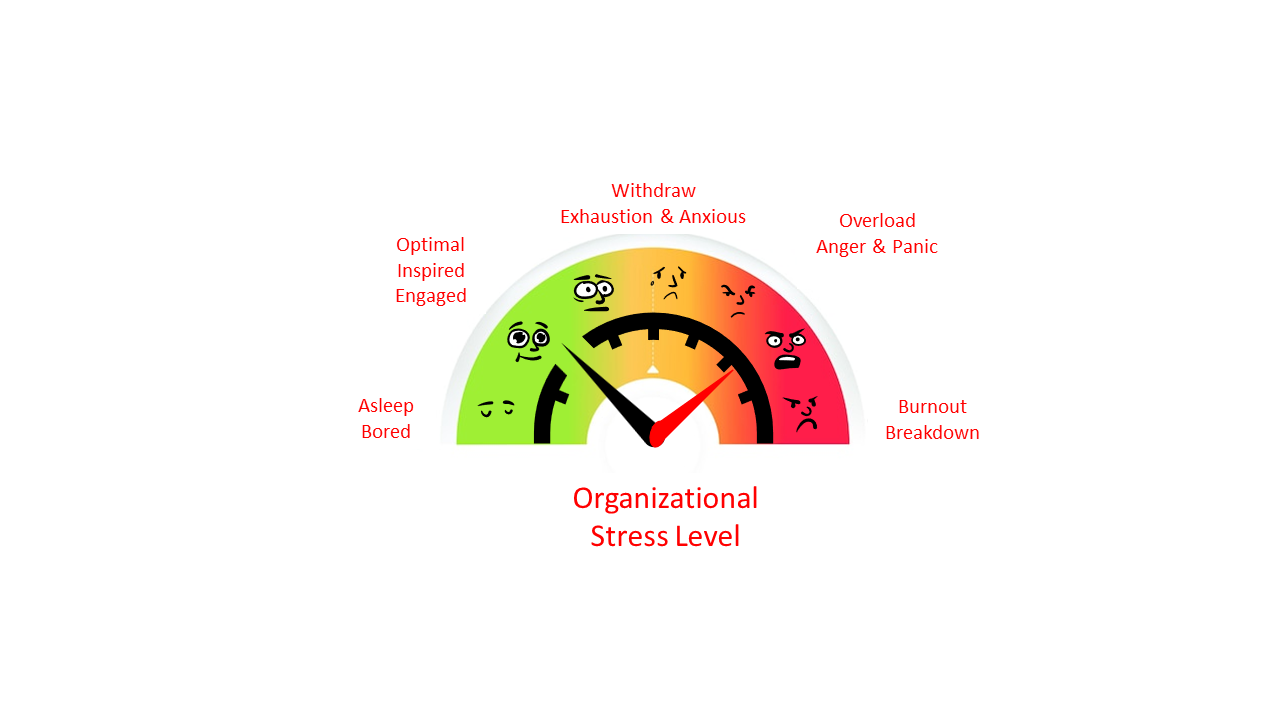
Imagine what you can do with 11 dimensions of stress, at least three levels of the organization…
Emotional intelligence as a capability
Can you really change an intelligence in two or three days?
If a two-day workshop could transform emotional intelligence, wouldn’t every workplace be centered on happiness by now?
A workshop can get people started. We build on a research-informed EQ assessment with at least three months of focused development, typically three to six. Leaders practice on real challenges, get feedback, and account for what changes in how they lead and how their teams work.

Build emotionally intelligent systems
Make the culture you want easier to practice.
Teach leaders to notice and manage their own reactions, listen for what people need, and respond constructively under pressure. Then build those skills into how teams set priorities, raise concerns, and support one another.
For example, if employees hesitate to flag overload, leaders can practice receiving difficult feedback while the organization gives teams a reliable way to surface competing demands and resolve them early.

Feedback and accountability
How will you know the change is sticking?
Agree on a baseline, who owns each change, and when to review it. Use feedback throughout development to decide what to reinforce, adapt, or address next.
Stress patterns
Look for changes in the sources of pressure you agreed to address, and where new pressures are emerging.
EQ in practice
Review examples of how leaders handled difficult conversations, responded to feedback, or adjusted their approach under pressure.
Follow-through across teams
Check whether agreed practices are being used, issues raised are acted on, and leaders close the loop with employees.
Business outcomes over time
Review relevant trends in engagement, retention, or productivity alongside changes in workload, staffing, and other conditions.
Let’s strategize
Where does pressure keep showing up in your organization?
Bring one recurring challenge. We’ll explore what may be driving it, which EQ capabilities would help, and what you could change in the way work gets done.