Tag: leadership

  • Infusing a Sense of Hope – Requirement for Annual Reviews

    Infusing a Sense of Hope – Requirement for Annual Reviews

    [vc_row][vc_column][vc_column_text]
    [/vc_column_text][/vc_column][/vc_row][vc_row][vc_column][vc_column_text]

    Infusing a Sense of Hope – Requirement for Annual Reviews

    By Dr. Ted Sun And Dr. Lloyd Williams

    Everywhere you turn, news about the pandemic and fears over physical health dominate the media. With the current increases in COVID numbers across the country, how should organizations conduct their annual reviews? In most companies, this is a process with negative connotations across the board, from employees to managers. While annual reviews typically focused on established metrics for performance within the organization, the current environment requires leaders to help people heal from the psychological damage of the pandemic and the remote workplace.

    Pre-COVID Annual Performance Reviews

    Annual performance reviews are an activity that is often disliked by most employees and managers. For those who are smart enough to play the game, research has found that employees tend to improve their performance in the last few months leading up to the annual review and then go back to their normal.  For most employees, it is something they must do to get their bonus and/or pay increases. The process is filled with complaints from employees. For most managers, annual performance reviews take up time that they do not have. In some organizations, everyone gets the same bump in salary with little to no impact from the annual performance review, making it a waste of time.  For others, this can be an interesting game of politics. With all this negativity around annual performance reviews, why are so many companies continuing the same practice? Is there not something better out there that can predict performance consistently among all employees?

    Psychological damage of COVID

    The current environment has forced countless people to work remotely. The fear, anxiety, and uncertainty that this pandemic has caused is undeniable. With people working remotely, it is very easy to feel alone. No matter how many Zoom meetings one can have in a day, human beings need more to build relationships and feel a sense of connectedness. The likelihood of burnout under these conditions is significantly greater than any era we have gone through in the past.  With the conversations on performance management starting in December, leaders can get ahead of this costly problem while helping their employees heal from the psychological damages and enhancing the system to possess predictive capabilities.

    Infusing a sense of Hope

    While many companies have already started, or even completed, the writing portion of the annual performance reviews, the dialogue between employee and managers usually takes place in December. Within the pandemic environment, managers and executives require additional skills to lead their team. At an organizational level, a strategy to infuse hope into the process is a necessity for every employee, including the executive and management teams.

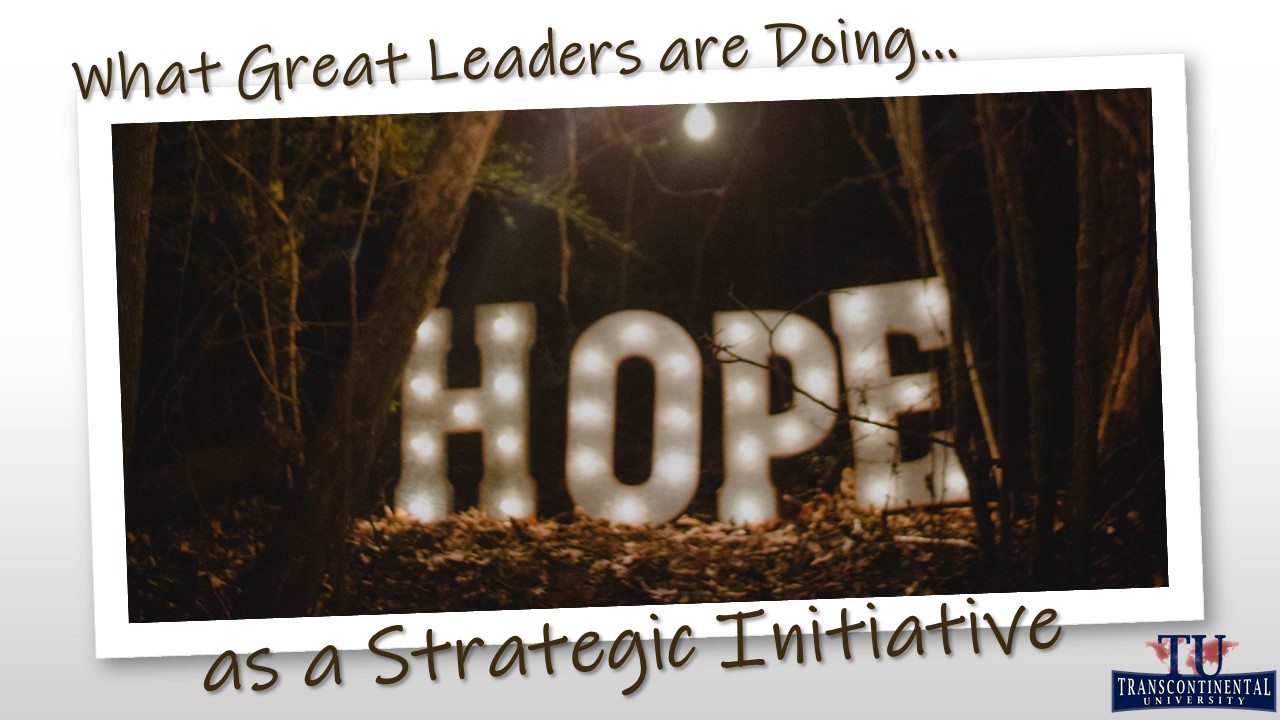
    Hope is a powerful emotion and a key aspect of being an emotionally intelligent organization. Hope is what opens the door for innovations. In the current environment, we need hope more than ever. After working with numerous business leaders across the world, here are a few actions and tactics to give hope:

    • Being Seen: Each day, appreciate 2 people for their efforts and achievements. When you impact 10 people each week, you’ll begin to see a cultural shift. While this help employees feel like they’re being seen for their hard work, the action also helps leaders focus on the positive achievements of those around them and help them see hope around them. Too often, managers get caught up in endless firefighting, and not enough time or effort on strategic choices that make a world of difference.
    • Being Heard: When conducting the annual review, leaders can spend more time asking thoughtful questions that show care. Instead of the norm of going over the written form, ask questions that get meaningful content from employee concerns and challenges, and end with questions that enable employees to show off their ideas. The design of the questions must be a strategic choice that leads employees to feel empowered. The act of asking the questions can show employees how much individual consideration is being placed on to them and that their ideas are being heard. This requires a system of proactive engagement from employees’ ideas.
    • Improve Confidence: Confidence is the foundation of success and the ultimate solution against burnout. As research have shown, people with confidence are more likely to take on risks and succeed in the roles. Confident people will perceive reality very differently than insecure individuals. Organizations can design confidence building strategies to ensure this preventative trait exists in their talent. Confidence can be developed by providing achievable short-term targets and make them visible. People need to feel like they are in charge and can make a difference. This is crucial in the current times, since most people have significant uncertainty about their jobs, their family, their friendships, and life as they know it.
    • Strategic Growth: Empower people on a journey of growth, something practical that develops their skills and intelligences. This is far from traditional training programs where information is pushed at people and overwhelming them with “stuff”. Developing people needs to be practical, and a feedback loop is required to give them confidence and a sense of hope. This is the foundations of developing a learning organization that consistently creates innovations and retains its top talent.

    The above are only a few actions and tactics within the strategic initiative of hope. To prevent massive burnout and loss of innovation/productivity as COVID continues, every organization should embrace positively charged strategic initiatives such as this. Especially in a time where every person has been swimming in an ocean of anxiety and uncertainty, hope is the balance we need. From a strategic perspective, the human systems within organizations need to reflect hope on a continued basis, not just a few simple actions. Motivational systems, performance management systems, leadership systems, learning systems, organizational design, change management systems, etc. are vital systems that need to infuse hope for the productivity and wellbeing of employees.

    The gift of hope is an amazing blessing. When done correctly, it drives learning and innovation that is needed in every organization. Take daily action to make a difference to your life and those around you. We are here to help you make that difference.

     [/vc_column_text][/vc_column][/vc_row]
  • Is Productivity of Remote Work Sustainable in Our Pandemic World?

    Is Productivity of Remote Work Sustainable in Our Pandemic World?

    [vc_row][vc_column][vc_column_text]

    [/vc_column_text][/vc_column][/vc_row][vc_row][vc_column][vc_column_text]

    Is Productivity of Remote Work Sustainable in Our Pandemic World?

    By Dr. Ted Sun

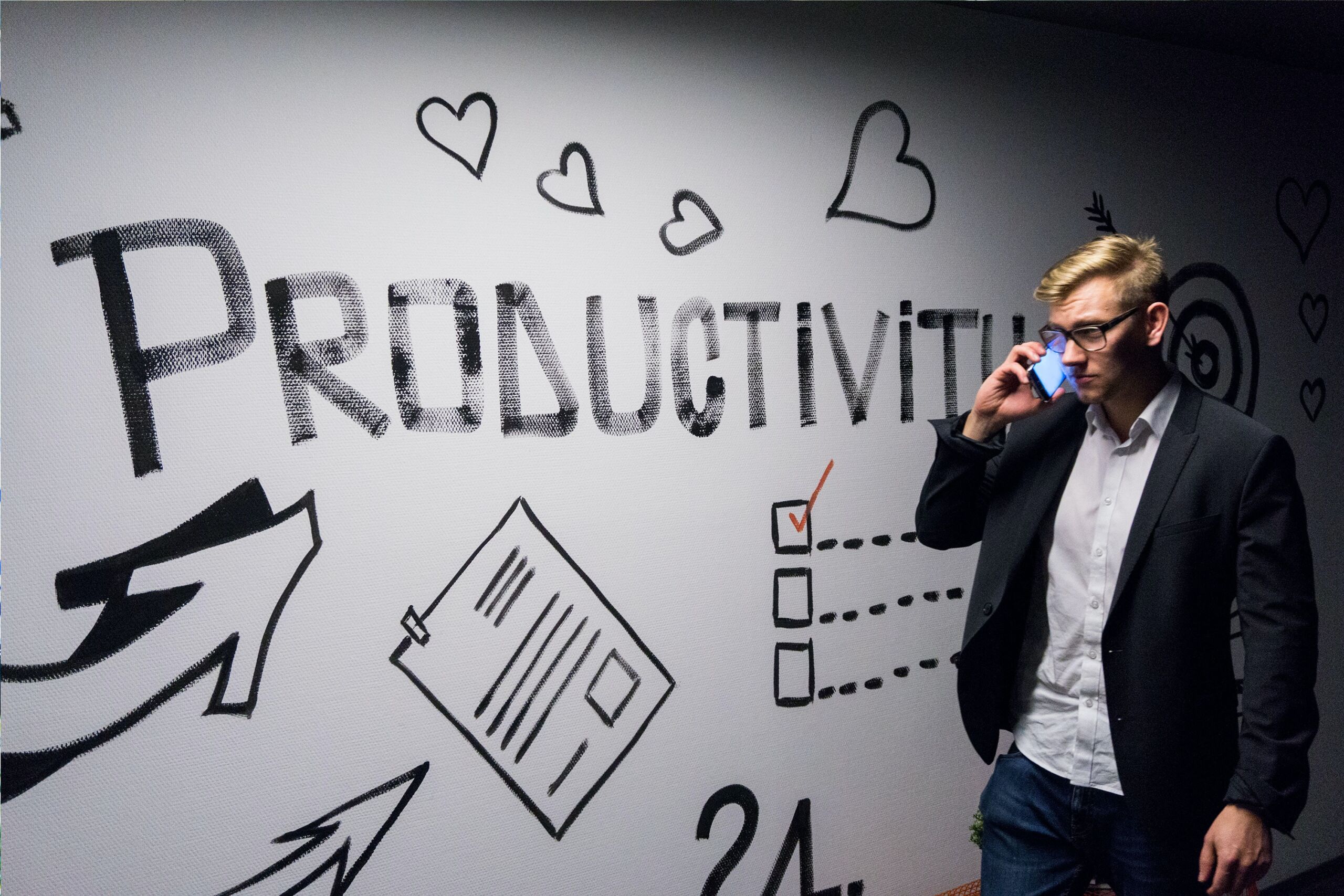
    Working remotely was forced upon countless employees across almost every nation in this global pandemic. After over two months of self-quarantine and working from home, executives of many companies have seen the productivity of its employees. Some may begin to wonder why they ever needed offices in the first place, while others have begun to make decisions about future office space needs. The challenge of productivity and where one should work is far from simple. Systemic considerations are crucial to avoid major mistakes that cost millions and take a long time to reverse. While businesses continuously strategize to minimize costs and maximize productivity of its employees, utilizing a systems thinking approach enables executives to see the multidimensional complexity of their decisions.

    Systems thinking is a complex way of seeing the world. Essentially, systems thinking is a process of thought that empowers leaders to see the interconnectivity of life and the world around us; it involves viewing the whole from broad perspectives of overall structures, patterns, and cycles rather than seeing only specific parts or events.  Systems thinking allows us to ask better questions, to become aware of systems we may not have been aware of or of consequences of our actions we may otherwise be oblivious to, and can produce solutions that leverage improvement throughout a system. As important as this is for executive decision making, most graduate programs are not designed to develop this type of strategic thought. This articles hopes one of many countless applications of systems thinking towards the question of sustainable productivity with remote work.

    Historical Perspective

    Before the pandemic, most organizations were still entrapped in the industrial belief: time equals money. During the industrial revolution, productivity in the assembly line was a linear function of time input from its workers. It made perfect sense to manage peoples time.  Since then, organizations moved into the knowledge economy, the digital economy, and the global economy. Unfortunately, old beliefs are hard to break. Managing people’s time has not changed much as a philosophy for many organizations. Especially for those working in various offices across the nation, salaried employees were expected to put in “x” amount of time in the office physically. While the amount of time varies among industries, the same mentality of time input at the office was related to productivity. This is far from reality, however, when performing knowledge-based work.

    Ample scholars like Peter Drucker have spoken to the age of the knowledge worker during the late 1990’s and early 2000’s, while management of employee time has not changed. The Covid-19 pandemic has forced organizations to send their workforce to work from home. This has generated a realization that perhaps we no longer need to see people in the office for them to be productive; instead, we can oversee their work by productivity. Many organizations have seen workforce productivity remain consistent during this pandemic environment. Some have even seen productivity increased among some employees working from home. The pandemic has imposed a belief shift in management practices: no need to manage employee time, just their productivity.

    The more challenging questions to consider: Is this productivity sustainable? A systemic exploration from multiple stakeholder perspectives, including the employee, the family, and the employer, and from a perspective of long-term impacts, are just some of the key considerations of a wise executive. Each perspective below ends with a reflective question as part of strategic thinking.

    Employee Perspective

    Working from home has been a tough transition for some; for others, it has been a great sense of freedom. Getting up without having to get dressed for work, and not having to deal with a commute to the office has resulted in less stress in the morning and more time for work and productive thinking. This works for some employees who have self-discipline and are motivated. For others, it may be a nightmare to not be dressed appropriately and to be physically in the office to think professionally. A few may have even enjoyed a beer or two throughout the day, since it would be difficult to enforce certain office policies. This behavior may be playing a part in the dramatic increase in alcohol sales during the past couple months. If the employee shows up to Zoom meetings with a professional appearance, they are considered working. The new sense of freedom felt by employees has resulted in a wide range of productivity on the surface. Underneath the surface, the numerous distractions from home such as family members, pets, and social media can lead to many inefficiencies and mistakes. While working from home for a couple of months, however, may be a workable practice short term, what happens to relationships among peers and with the relationship with managers?

    Ample studies note a lack of emotional connection among friends on social media.  Over time, the emotional connections among work teams in an organization will diminish, new hires will not benefit from the office in-person developed working relationships, and differences in old established relationships vs. those with new hire relationships could be accentuated.  When work becomes a transactional exchange of tasks for compensation, this poses dangerous challenges to teamwork, continuous innovation/collaboration, and more importantly, loyalty to the organization. When employees are always working remotely, the diminishing relationships among peers can be dangerous.

    How could organizational leaders be mindful of building solid relationships virtually?

    Family Perspective

    The family is one of the top values of employees. Many people work hard to provide for their family. On one hand, working from home is great for additional time with family. The idea of work-life balance always is a consideration for some companies. Numerous rankings of best companies to work for include work-life balance as one of the key metrics. On the other hand, it has placed additional complexities and tension among family members. The boundary between work and personal life has been blurred due to technological advancements that make work possible from anywhere over the last decade. What happens, therefore, when people work from home for extended periods of time?

    Working from home virtually eliminates the boundary between work and personal life. Employees are now responsible to create their own boundaries so work time is focused and productive while also ensuring quality family time can be achieved. For most employees, they were never given a new set to skills and tools to set healthy boundaries when the pandemic hit. As a result, coming out of quarantine time, have seen an increase of stressed marriages and partner relationships due to extended and unplanned time together in some nations. The definition of family and work-life balance is changing. Most of it is happening without much conscious choice, which can be risky. Violations of basic boundaries could damage personal life relationships. In theory, a productive employee must have a peaceful and happy personal life.

    How could organizational leaders lead by facilitating a constructive dialogue of work-life balance for one’s family and personal lives?

    Employer Perspective

    In the short term, executives have seen the productivity of their employees while working at home. This leads to an obvious re-consideration of expenses needed for physical facilities. Some executives have already decided to downsize their office space in the coming years. Short-term thinking leads to a simple business purpose – reduction of expenditures. Basic productivity, however, is only one aspect of organizational purpose.

    Significant studies have spoken to the importance of innovation for sustainable success of any organization. Unfortunately, most companies do not have a metric for innovation that guides processes. As employees continue to work at a functional level remotely, the diminishing relationships could lead to less and less innovation as well as loyalty. This could be detrimental to the long-term survivability of the organization.  Some organizations, seeing cost benefits of managing employees remotely could unfortunately begin to question why they employ talent at higher costs when they can find cheaper labor anywhere to work remotely. Such thinking disregards valuable perspectives from the workforce talent. Strategic initiatives such as innovation, therefore, must be at the top of the executives’ priorities.

    How could organizational leaders begin to create leading metrics like innovations per week within their organizations to get a better understanding of how remote work has influenced key strategic drivers of success?

    Sense of Community Perspective

    The literature on leadership of successful companies often mentions the need for meaning in one’s work. Without meaning, people will simply come and go, and employee turnover will greatly limit organizational success. The current reality of working from home adds an entirely new dimension to meaning in one’s work and its relationship with a sense of community, which also is vital to all human beings. One of the key aspects of systems thinking is the time dimension where decisions have long term consequences at many intervals and over many aspects of human life. If all relationships within an organization are digital, life would lose meaning. That is not the end goal of organizations.

    Moving forward, organizations that continue to innovate through collaboration with meaningful relationships among its employees, where there is ample flexibility along with responsibility and without the loss of a sense of community, will thrive in the post-pandemic environment. Organizational design must be a key function that thinks systemically about decisions that impact the lives of many and over time. Efficiency in costs and productivity must be balanced with meaningful relationships and continuous innovation.

    How could organizational leaders include examination of long-term consequences when thinking systemically how to ensure their organization will thrive long after the world breaks out of the current pandemic quarantine?

     [/vc_column_text][/vc_column][/vc_row]
  • Secretes to Effective New Year’s Resolutions

    Secretes to Effective New Year’s Resolutions

    [vc_row][vc_column][vc_column_text]

    [/vc_column_text][/vc_column][/vc_row][vc_row][vc_column][vc_column_text]

    Secretes to Effective New Year’s Resolutions

    As a new decade falls upon us, many of us are making or have made New Year’s Resolutions for 2020. While many tend to be optimistic about a bright future, most New Year’s Resolutions tend to fade away in memory as the months go by. If you ever ask people about what their new year’s resolution was in 2019, many would either not remember it or be too embarrassed to say it due to the lack of achievement.  Don’t worry, this is completely natural.  We make new year’s resolutions because human beings are hopeful creatures. We like to look in the mirror and see a positive image. We like to know that we have confidence in achieving goals that we set for ourselves. Unfortunately, the reason why new year’s resolutions are challenging is because most people don’t have a solid learning structure that empowers us to consistently achieve our new year’s resolutions.

    To be successful in seeing your New Year’s Resolution become reality, there are some secretes that need to be known and put into practice. These secretes are based on the research of many successful entrepreneurs. The secretes below are not just a list of behaviours, but also reflect a new way to think.

    1. Start with a long-term focus:

    Let’s start with building New Year’s Resolutions with the most potential. Goals are an interesting concept in the human brain. They give our brain a clear finish line to work toward but they can also be limiting. When you set a goal of taking one step towards something for the year, you will likely stop when you achieve it.  There’s a reason why many often set goals that fall short of their true potentials. Our brain tends to be our own worst enemy when it comes to setting goals.  Unless trained to think systemically, most people let their current reality limit what they can achieve. Our brain can perceive situations such as the current economy, educational level, job positions, and social status as giant obstacles. They stop empowering goals from inception. To break free from this, start with 5 or even 10 years out. Such a longer time focus minimizes the influences of current realities. Start with how you’d like to see yourself 5 or 10 years from now, then build the remaining steps. Once you have a clear image of yourself 5 years from now, build where you need to be at 3 years. After that, you would establish what it needs to be in 1 year – for 2020.

    2. Put it in Writing:

    Putting New Year’s Resolutions in writing helps the brain solidify the commitment. This is part of our learning process. A thought comes and goes with neurons in the brain passing information to each other. This happens with very short memory. When we take the action to write it down, the behaviour solidifies the information. We when see it in front of us, it furthers our memory of this commitment. More often, we’ll make additional enhancements of what we write down as our analytical minds get to work on improving what we see from our own hand writing.

    Note: typing this out can also work but is not as effective as one’s own handwriting.

    3. Reflect Deeply:

    This is something that is crucial to eliminate self-sabotage. Reflecting on who you are includes exploring what your beliefs and values are. Having done countless executive retreats and workshops, it’s amazing to see how long it often takes people to state their top 5 values. If you don’t know who you are, it’s very tough to make the efforts to get there.  For so many people, their identity is built on a victim mentality where it’s always someone else’s fault. And if they got passed it, they would have no idea who they would become, which is terrifying.  Reflecting on who you want to be can be challenging and fun. Simply have a close friend ask you the question “Who are you?” multiple times.  Each time, you’ll brain will dig deeper into your purpose.  This may take multiple attempts, depending on many factors inside you. But this has to be an honest reflection in order to empower the achievement of your New Year’s Resolutions.

    4. Develop key skills needed:

    Once you’ve placed your New Year’s Resolutions down on paper, develop more detailed steps to achieve these goals. You can break down the New Year’s Resolution into year-end goals, then down to goals for every 3 months.  Then ask yourself: What are the key skills and knowledge you’ll need to achieve these goals? In most cases, you need the new or enhanced skills to achieve goals. Planning out your personal development is something that everyone should do. This is far different from what an organization might have in their performance management system.  Only you know yourself best. And, if you’re honest with yourself, you can create a powerful list of skills to develop for your needs.  Then locate the resources needed to develop those skills, which are likely to be on the web. Information is abundant, but a focus to make that information into your knowledge and practice it enough to become a skill is your responsibility and part of your learning structure.

    5. Share it with Accountability:

    Your New Year’s Resolution is a living entity.  Successful leaders share what they are working on with others to obtain support and accountability. This step starts the first set of revisions that you’ll be making to track and learn from the actions. Select a few people who would care about your development and have the confidence to hold you accountable to the actions you’ve committed to taking. They can easily place specific markers in their calendar to check in with you on a regular basis and perhaps provide resources you need to develop specific skills. This will help the brain further commit to changes. Without accountability, our brain is brilliant at making excuses for the lack of action.

    6. Measurable:

    Now that you’ve gotten some specific goals and skills to develop, you’ll need to measure them with sufficient time to make adjustments. In order to make improvements in anything, you’ll need to know how you’re performing. This is not something that’s as easy as it sounds. Measuring your ability to develop skills is not taught in most educational institutions. Countless people talk about the need to develop leadership skills, for example. What are the practical measures of this? This is not something I can tell you, since there are so many skills and goals. Here are some examples:

    Common New Year’s Resolutions Areas Measurable Goals                                              
    Lose weight/Be Healthier Body Mass Index every month

    # liters of water drank per day

    # hours of exercise each week

    Improve communication Number of questions asked in a normal conversation

    Number of ideas gathered daily

    Financials / Debt Efficiency in revenues/hour

    Debt payment per month

    Improved Leadership Number of people inspired in a day

    Number of new desires and motivators in team member inventory

    Number of innovations per week


    Making effective New Year’s Resolutions is not that simple when you first tackle it. But, then again, anything worth achieving calls for significant effort. I hope you’ll be able to use these steps to make drastic transformations in your life and bring the dreams of who you wish to be into reality.

     [/vc_column_text][/vc_column][/vc_row]